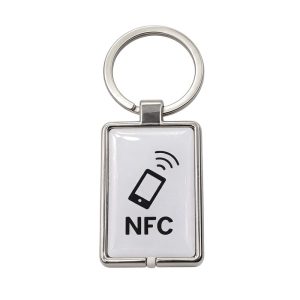
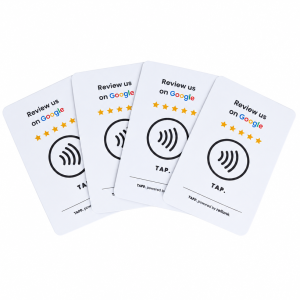
Short answer: an NFC review product removes the single biggest reason customers never leave reviews — friction. The customer taps a card, sticker or stand on the counter, and your review page opens directly. This guide compares the four main formats on cost, MOQ and venue, then covers the five questions worth asking before you commit to a bulk order.

Key takeaways
- A happy customer forgets within days — a tap at the counter catches them while the experience is still fresh.
- PVC cards are the volume play ($0.03–0.90 at bulk); acrylic plaques win on presentation ($1.30–2.00+).
- NTAG213 is enough for a review link; NTAG215 adds headroom for a fuller profile later.
- Any NFC sticker fails on metal — specify anti-metal construction for metal surfaces.
- For bulk orders, ask for per-unit pre-programming and tap-testing before dispatch.
The four main formats
Review NFC products have grown into four distinct formats, each suited to a different installation:
| Format | Typical unit cost (bulk) | Typical MOQ | Best for | Trade-offs |
|---|---|---|---|---|
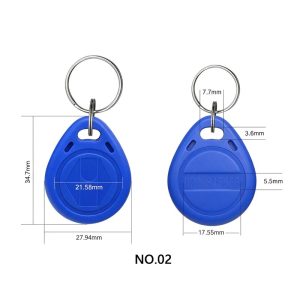
| PVC review card | Low ($0.03–0.90) | 100–500 pcs | Hand-outs, trade shows, counter displays, multi-branch rollouts | Lowest cost per unit; can be misplaced or taken |
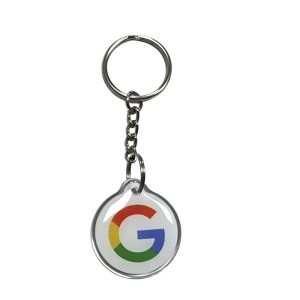
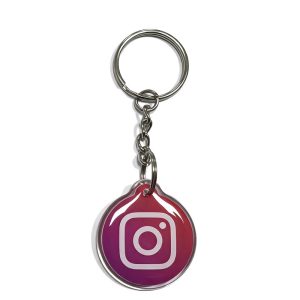
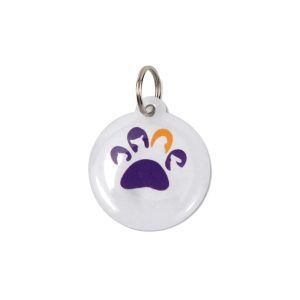
| Epoxy / dome sticker | Low–mid ($0.20–1.80) | 100–200 pcs | Tables, POS machines, glass doors, fitting rooms, mirrors | Adhesive-dependent; surface must be smooth and clean |
| Acrylic plaque / plate | Mid–high ($1.30–2.00+) | 20–100 pcs | Salons, boutiques, premium brands, reception desks | Higher unit cost; strongest visual presentation |
| Counter stand | Mid ($0.50–1.50+) | 50–100 pcs | Checkout counters, hotel nightstands, handover desks | Takes surface space; highest visibility |
Figures reflect bulk pricing observed on B2B platforms, September–October 2026. Actual quotes depend on chip, size, printing and quantity.

Matching the format to the venue
- Restaurants and cafés — Epoxy stickers on each table, plus a stand at the host desk or beside the card machine. Catch the customer while the meal is still fresh, and again at payment.
- Salons, barbers and clinics — An acrylic plate at each station reads as part of the fit-out rather than a piece of marketing. A stand at reception covers the payment moment.
- Hotels and short-term rentals — A stand on the bedside table or at checkout. Plaques work well in rooms where you want the prompt to feel permanent.
- Retail and showrooms — Stickers at fitting rooms and beside the card terminal; a stand at the till.
- Trades and service businesses — A PVC card handed over with the invoice at the door. It travels with the paperwork and gets tapped at the customer’s convenience.
- Multi-site brands — PVC cards or stickers at scale, with each unit programmed to its own branch’s review page. This is the format that makes most sense for franchise rollouts.
Which platform can the tag open?
Any URL, in principle. In practice, review products are ordered against a specific destination:
- Google Business review page
- Tripadvisor
- Trustpilot
- TikTok
- Yelp, Booking.com, and industry-specific platforms (Checkatrade, AutoTrader, Rated People, Feefo, Reviews.io and others)

Some suppliers ship products pre-printed with the platform’s branding and pre-programmed to the link you provide. Others supply blank units you encode yourself. For a bulk order, pre-programming is the better route — it removes a manual step per unit and lets the supplier tap-test before dispatch.
Five questions to ask before a bulk order
1. Can the chip be reprogrammed if my link changes?
This matters more than it sounds. Business listings move, platforms change URL formats, and a branch gets renamed. NTAG-series chips can be rewritten unless you lock them to read-only. A printed QR code on the same product cannot be changed after printing. If you want both — a tap target that can be updated and a fixed QR fallback — ask for a dynamic QR code, which redirects through a URL you control.
2. Is there a QR code fallback?
Not every phone has NFC switched on. A printed QR code pointing to the same link covers those cases. On stickers and plaques it’s a single extra print pass; it’s worth specifying.
3. What chip is inside?
For a simple review link, NTAG213 is sufficient and the most cost-effective. If the same product might later carry a fuller profile or multiple links, NTAG215 gives headroom for a small per-unit premium. Ask the supplier to state the chip on the quotation — listings often omit it.
4. Will it work on my actual surface?
Standard NFC stickers fail on metal. If the install is on a metal door frame, a stainless counter, a fridge or a machine housing, specify an anti-metal construction with a shielding layer. This is the most common cause of sample-works-but-install-fails reports.
5. Is it programmed and tested before shipment?
For orders above a few hundred units, pre-programming and tap-testing is what separates a smooth rollout from a box of unusable stock. Ask whether each unit is encoded and tested, and whether the supplier can provide the exact link they programmed for your records.
One compliance point worth knowing
Making it easy for customers to leave a review is fine — every major review platform encourages it. What platforms prohibit is offering incentives in exchange for reviews. The distinction is straightforward: a tap card that removes friction is acceptable. A tap card paired with a leave-a-review-and-get-a-discount offer is not, and puts the business’s listing at risk. Worth flagging to any customer who asks.
Why sourcing direct matters on this category
The gap between factory pricing and retail pricing on review products is unusually wide. Bulk unit costs on B2B platforms sit in the range of roughly $0.20–2.00 depending on format, while branded retail equivalents in the UK and US sell at £16.99–34.99 per unit.
For distributors, agencies and multi-site operators, that spread is the margin. It also means the two variables that decide profitability on this category are unit cost at volume and consistency across repeat orders — not the chip, which is largely commoditised.
What to send a supplier when requesting a quote
- Format (card / sticker / plaque / stand)
- Chip (NTAG213, NTAG215, or NTAG216)
- Size and shape, including any custom die-cut
- Quantity per link, and total number of distinct links (multi-branch orders)
- Destination URL or platform for each link
- Installation surface — standard or metal
- Whether you need QR fallback and dynamic or static QR
- Whether units should be pre-programmed and tested
Where LOZAVY fits
LOZAVY has manufactured RFID and NFC tags, inlays and smart cards for over 16 years, with in-house chip encapsulation, printing, die-cutting and forming — no middleman on the production line.
We supply the full range of review formats: PVC cards, epoxy dome stickers, acrylic plaques and counter stands, in NTAG213/215/216, with custom shapes, full-colour UV printing, dynamic QR options, anti-metal constructions, and per-unit encoding and tap-testing before shipment. Samples can be produced quickly so you can verify material, print quality and read performance before committing to volume.
Send us your format, quantity and destination links — we will quote and prepare tested samples.
WhatsApp: +86 158 2028 7644 (Ms. Lychee Liu) · info@lozavy.com
Sources: bulk pricing and sales volumes observed on B2B platforms, September–October 2026; retail pricing observed on UK and US review-product storefronts, October 2026. Figures are indicative — request a current quotation for your specification.